La Petite Fantôme Gris: staying in a French state of mind

Updated: Aug 25
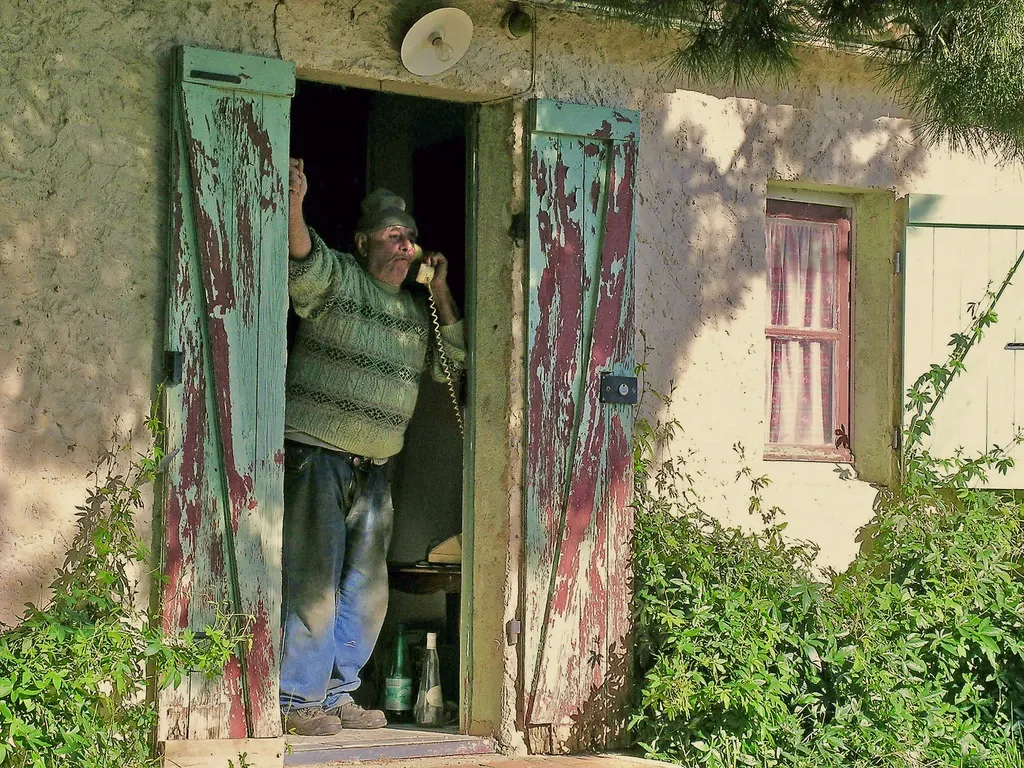
It was a scorcher the August day we arrived in the south of France. Kim and I had flown in from Boston to visit our friends Jocelyne and Patrick, and to admire their new home, still under construction, in the old village of Fayence.
They’d rented a nearby villa with a pool and had brought along Jacky and Christiane, friends from Paris. Lunch that day was a three-hour affair with several bottles of a tasty local rosé from the Château de Valbourgès. “They’ve made wine there since the end of the Crusades,” noted Patrick. “We’ll go there one day to visit their old wine cave.”
After all the wine at lunch and the heat, I was ready to go anywhere, especially a cool, dank medieval wine cave. Instead, I helped Patrick with the cleanup, lugging bags of trash and empty bottles to the poubelle out on the street.
That’s when I laid eyes on the most adorable car I’d ever seen, parked at the curb.
“What is that?” I asked Patrick.
“Ah, yes, she is special, no, that one. We call it the cat-trel.”
My French was still in the early stages of development, including numbers and letters.
“You know, a 4L. Made by Renault and very popular in the 1960s. You should have one.”
“Oh, I would love to have one.” That was the wine talking, of course.
Four months later, Patrick sent an email stating that he and Jacky had found a 1966 Renault 4L for sale in Provence for only € 600.
“It’s a really good one, and Jacky knows because he worked at Renault in Paris for 30 years.”
I shared this bit of information with Kim, noting that it didn’t seem like a lot of money for a cute old French car. Kim was taken aback by this new piece of information.
“You asked them to find us a car?”
“Not exactly.”
I showed her the pictures Patrick had sent of a dingy gray Renault 4L, crammed inside a small barn next to an ancient tractor, several old bicycles, miscellaneous farm equipment, and another Renault with several dogs sleeping inside. Kim, who’s from Maine and more practical than me, wanted to know if it still worked (I’m no mechanic).
“And what will it cost to ship it to Boston?”
I went online, where I learned it wouldn’t be cheap. An old Renault that would cost us 600 euros to buy would cost another $5,000 to ship across the Atlantic. I mentioned this to Patrick on a Skype call. He was silent for a minute and then, in his best logique française, replied.
“You cannot put a price on an adventure, and a good story.”
Kim thought it was still a high price for a good story plus an old car. And then Patrick emailed to say that Jacky was happy to take the 4L up to his garage in Paris and, over the next 6 months, clean and repair it, charging us only for any parts it might need.
That clinched the deal for both of us.
“Let’s do it,” said Kim.
“We’ll be bringing a piece of France to Maine. We can call her the little gray ghost.”
Patrick liked the name but noted that because a car, a voiture, takes the feminine article, la, the correct name would be la Petite Fantôme Gris.
“You can have a masculine fantôme, of course, with le, but in this case, she is a car, isn’t she?”
A year later, our old gray Renault 4L, which had once been a blue police car in Marseilles, was sailing across the Atlantic, bound for Boston. Flying over were Patrick, Jocelyne, Christiane, and Jacky, and we all converged in Boston at the same time, where we waited anxiously for the customs office to call. And we kept waiting.
Finally, a gruff voice with a heavy Boston accent left a message:
“Is your cah the dark green Bentley with the leathah interior, or that French thing?”
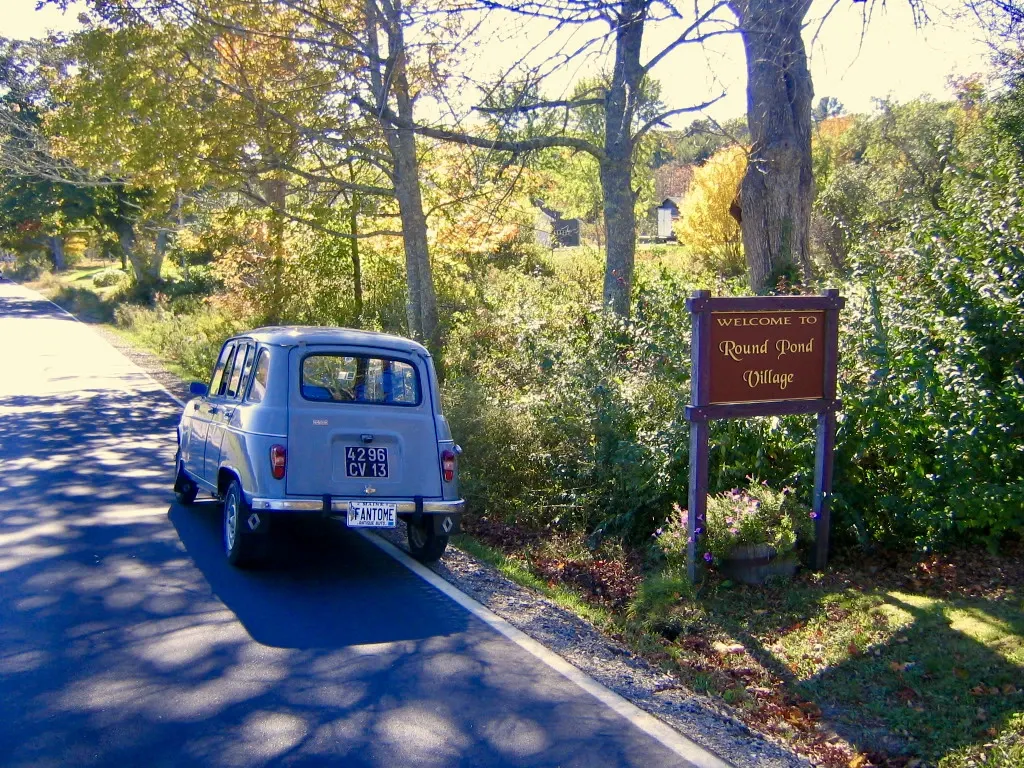
The next day, we backed the Petite Fantôme Gris down the container’s ramp and began the 4-hour-plus drive up to Maine.
Déjà vu, it was August once again, and close to 100 degrees outside. On the highway, cars were stopped on the shoulder, hoods open, steam coming from their radiators. But the Renault chugged along just fine, at 45 miles an hour.
The next day, at our home for breakfast, Jacky asked if we knew anyone who could service the car for us. The 4L model had never been exported to the USA. No one in Maine would know what to do with her. So, we took a drive over to our local mechanic, David Landry, to see if he had any ideas.
He burst into laughter when we drove in, which annoyed Jacky and Patrick. But David explained that when he was a teenager, his family lived in West Africa.
“I wanted to learn how to drive, and my dad said if I could get it running again, I could learn on the old Renault sitting out back in the weeds. It was exactly like your car.”
‘The Fantôme’, as we’ve nicknamed her, has been with us now for 17 years, mostly thanks to David.
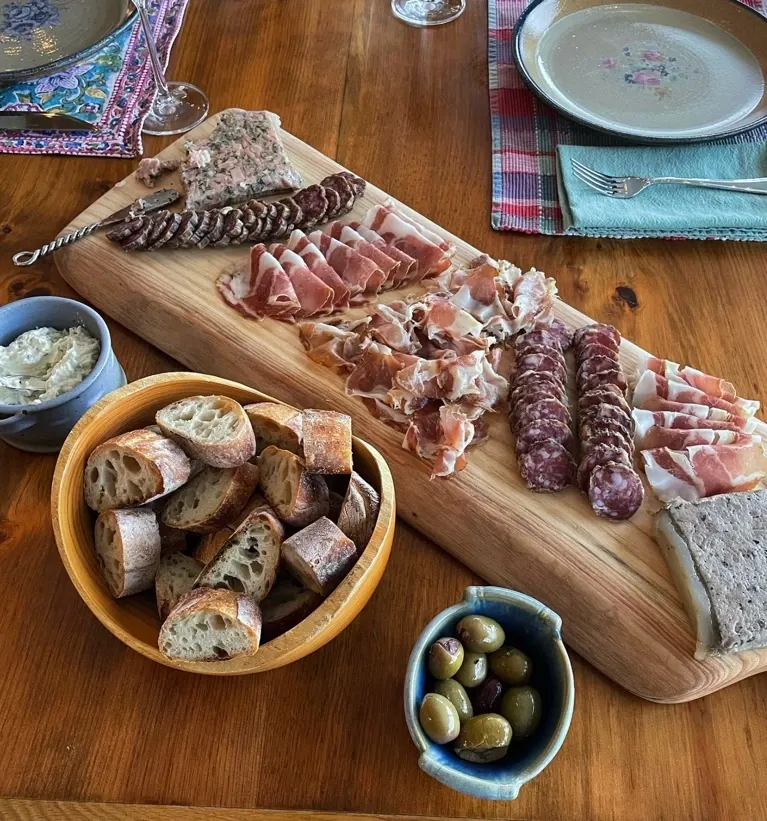
This summer, on Bastille Day, as they call it over here, we drove the Fantôme over to Broad Arrow Farm for their special afternoon Fête de Bastille. With her little French flag on top, we pulled in. Several people who were enjoying lunch outside (many wearing Basque berets for effect) jumped up and came over to look, ask questions, and take pictures.
I’m not saying you need an old French car to help you stay in a French state of mind when you’re away, but it can’t hurt.
How do you stay in a French state of mind? Have you ever had a love affair with a car? Have you ever driven a 2CV or a 4L? Mark would love to hear from you - leave your comments in the section below.


Comments